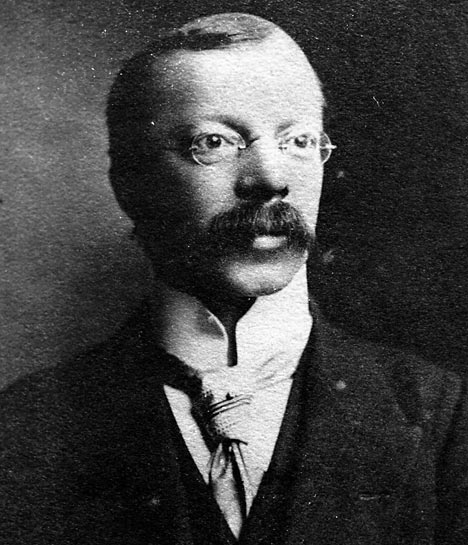
Crippen: Dr. Hawley Harvey Crippen was born in Coldwater Michigan, US. He got his medical qualifications in America but they were not accepted in the UK. He was a small, unassuming and mild man, not the sort of person you would expect to commit a murder, but looks can be deceiving, and the jury at his trial certainly didn’t judge him by his outwards appearance. If only they had, he probably would have got off with only a minor charge of lying to the police. When he first married Cora tTrner nee Kunigunde Mackamotzki, she was a relatively kind woman. But as he lived with her, she began to show her true colours. She would force Crippen to do the house work, and she became an alcoholic. Eventually, when she found out about his affair with Ethel Le Neve, she threatened to leave him, which would have been good for all concerned, if she hadn’t planned to withdraw their joint savings. Then, after a dinner party that the Crippen’s held, she disappeared. Ethel moved in with Crippen a short while afterwards, and started to wear Cora’s jewellery and fur, which most of her friends found suspicious. After the police investigated the matter Crippen told them that Cora had died of illness in America and had been cremated, when they didn’t believe this, he said that she had run away to America and was probably living with Bruce Miller. The police believed his story and left, but then he made a big mistake. He fled the country with Ethel. When the police returned and found the house empty, they conducted a thorough search of the house, particularly the cellar, where they found a mutilated body, with the head, limbs, skeleton and genitals removed. This body was thought to be that of Cora Crippen. Inspector Dew received a message from the SS Montrose, a ship equipped with wireless telegraph machines that two people on board matched the descriptions from the papers, and so he boarded the SS Laurentic, which was faster than the Montrose, and got to Canada before them, where he made the arrest. Crippen was tried and found guilty. His sentence was to be hung by the neck, until he was dead.
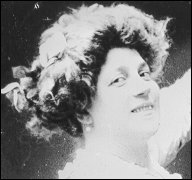
Cora Crippen: Cora Crippen nee Cora Turner, but born as Kunigunde Mackamotzki, despite lacking any great singing prowess, desired to become a grand opera singer. She was sponsored, in a way, by a married stove manufacturer who found a place for her to live and paid for her voice lessons. In 1892 she met and later married a widowed man, Doctor Crippen. In 1897 she and Crippen moved to England, and she began looking for work in music halls, at first it was under the name of Cora Motzki, but she changed it to Belle Elmore after she was dubbed the Brooklyn Matzos Ball due to her plump figure. She never became anything more than an average performer, but she was well liked by the rest of the performers working with her, and soon became honorary treasurer. She was described by one of the members of the guild of being like “a brilliant chattering bird of gorgeous plumage”. Her marriage to Crippen was not a happy one; after he was recalled to the states for a while she had an affair with a one-man-band act. After Crippen came back he left his job and then worked at several medical business of a dubious nature. During this period of constantly changing jobs he became involved with a woman who later would become a typist for him when he settled down to work for Yale tooth specialists. Her name was Ethel Le Neve. They did not have a fixed income, but they still lived quite well, Cora wore expensive jewellery and furs, but the still managed to save money. People said they lived somewhat squalidly, yet they still entertained guests. For a short while they took on paying guests, all ways men. Cora appreciated their company, but Crippen disliked having to clean their shoes and make their food on top of all of the other housework. It was about then that Cora started to drink. In December 1909 things went downhill. Crippen’s business was failing, and Cora threatened to leave, which, admittedly, would have made his life easier, but she also planned to withdraw all of their joint savings. They were still together on the 31st of January though, and they entertained two guests. Their visit ended after a game of whist, at 1:30 in the morning. That was the last that anyone but Crippen saw of her, until, supposedly, they found her body under the cellar floor, underneath their house of No. 39 Hilldrop Crescent.
Ethel Le Neve: Ethel Le Neve, at the age of 20 was hired for the job as typist at Yale tooth specialist, the dentistry clinic where Dr. Crippen Worked. It was love at first sight, but because Crippen was married, they were forced to meet in cheap hotels. When Crippen told everyone that Cora had returned to the USA to visit a sick relative, she almost immediately moved in to No. 39 Hilldrop Crescent. She also began wearing Cora’s jewellery, which had been left behind, which aroused the suspicion of several of Cora’s friends. When Crippen told everyone that Cora had died of Double Pleuro-Pneumonia, one of her friends, Mr. Nash, reported his suspicion to Scotland Yard. Crippen handled the story, as, if he did indeed kill Cora; he kept this fact from Ethel. Once he had convinced the police of where Cora had gone, he and Ethel fled the country disguised as a father and son. When the captain of the SS Montrose noticed the fact that Mr. Robinson and his son (Crippen and Ethel’s assumed names) matched the description from the news paper, he sent a wireless telegram to Scotland Yard, and Inspector Dew reached Canada first on a faster ship and arrested them. When it came to be time for Ethel's trial, she was acquitted and later moved to Toronto, Canada.
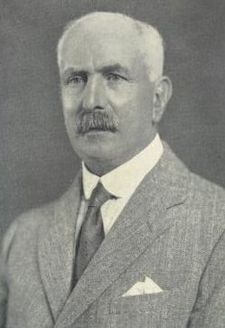
Walter Dew: Walter Dew was born at Far Cotton in Hardingstone, Northamptonshire. He was one of seven children; his parents were Walter Dew Sr. and Eliza Dew. On the 15th of November, in 1886, he married Kate Morris, and they had six children, but one of them died in infancy. Walter Dew was a minor player in the Jack the Ripper case. He was a Detective Constable at the time, and was recently transferred to the Commercial St. Police Station in H Division (Whitechapel). He did not play a major part in the case, despite what his memoirs say, although he did assist with bringing in Nikanar Benelius, a suspect who later was found to be innocent. When Dr. Crippen’s wife disappeared, Chief Detective inspector Walter Dew was put on the case. He believed Crippen’s story that Cora had fled to America. But when he returned to check some dates, Crippen and Ethel were gone. He brought in more men to investigate the cellar and found a body, buried in slaked lime under some loose bricks. He sent out telegraphs to all the ships equipped with the new wireless telegraphy systems. He received a reply from the SS Montrose and set off after it aboard the SS Laurentic, a faster ship. And so began a transatlantic race to America. Eventually Walter dew arrived before Crippen, and, disguised as a pilot, boarded the ship and arrested Crippen and Ethel.
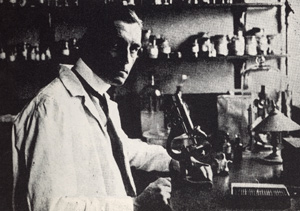
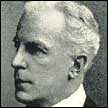
Sir Bernard Henry Spilsbury: Sir Bernard Spilsbury was a very charismatic man. He was the top forensic pathologist of his time. He was seen by most people to be a real life Sherlock Holmes, confident, brilliant and almost infallible. He was tall, handsome and always had a red carnation in his button hole. He was the forensic pathologist for the prosecution, and because he said all of what he believed were the explanations for marks on the skin of the body with such great conviction that everyone took every word he said as gospel. He was born in Leamington Spa in Warwickshire, in January 1877. In 1899 he attended the ST Mary’s Hospital Medical School in Paddington, London. He obtained his qualifications in 1905, and was then made Resident Assistant Pathologist. His first big case was when he was pathologist for the prosecution, and identified the mass of flesh found in the cellar as Mrs Crippen, and that she had been poisoned with hyoscine, and everyone believed him immediately, simply because he sounded completely confident of what he was saying. He was knighted for his services to the country in 1923. Despite a long and distinguished career, having performed approximately 25000 post mortems, in 1947, he took his own life by gassing himself to death. It is possible that one of the reasons he killed himself is because he realised that some of his ‘infallible’ conclusions may have caused innocent people to be convicted, as it is certainly known that Sir Sidney Smith, another great pathologist questioned his conclusions.
Captain Henry George Kendall: Captain Kendall was born in January 1874, and began his career in sailing in 1888. In 1900 he survived the shipwreck of the SS Lusitania (not to be confused with the RMS Lusitania, which was torpedoed during World War I). In 1910 he became captain of the SS Montrose, and assisted in the arrest of Crippen, when he sent a wireless telegram to Walter Dew of Scotland Yard. He had noticed that ‘Mr. Robinson’ and his ‘son’ looked almost exactly like the pictures in the paper of Dr. Crippen and Ethel Le Neve. He had noticed that Mr Robinson had marks on his nose, gained by wearing glasses for several years. He also had false teeth, as did Doctor Crippen, and he and his ‘son’ had been observed embracing behind the life boats. He had sent this information to Chief Detective Inspector Dew, and a short while later, Walter Dew arrived on the ship disguised as a pilot, and arrested Crippen and Ethel, AKA Mister Robinson and his son.
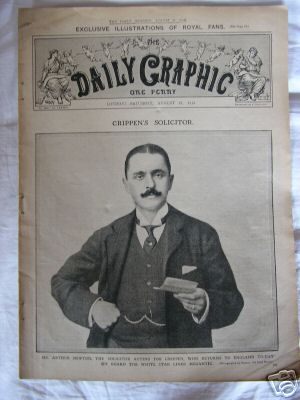
Arthur Newton: When Crippen was being held in Quebec, Arthur Newton, a London solicitor sent him a cablegram which read: Your friends desire me to defend you and will pay all necessary expenses. Will undertake your defence, but you must promise and answer no questions and do not resist extradition. Reply confirming. Arthur Newton.
Crippen accepted this proposition, but found himself stuck with Alfred Tobin, said to have been 'one of the dullest, most plodding advocates in the business'. Directly after the case Newton was suspended for a year after forging a confession from Crippen and selling it to Horatio Bottomley, and later disbarred and imprisoned after committing another fraud.
Alfred Tobin: 'one of the dullest, most plodding advocates in the business', Alfred Tobin was chosen as Crippen’s defence barrister. He did what he could, and if Crippen had cooperated, he could have done much more. It was viewed that the only thing Crippen could have done was to confess to have poisoned his wife, but that he had simply accidentally given her an overdose, and then panicked. If he had done this, it is possible that Crippen could have escaped the noose. However, this would have required calling Ethel to the stand, and this would not be done by Crippen. He refused the plan that may have saved him, and continued to protest his innocence. If he had just taken Tobin’s advice, he may have managed to escape the hangman’s noose.
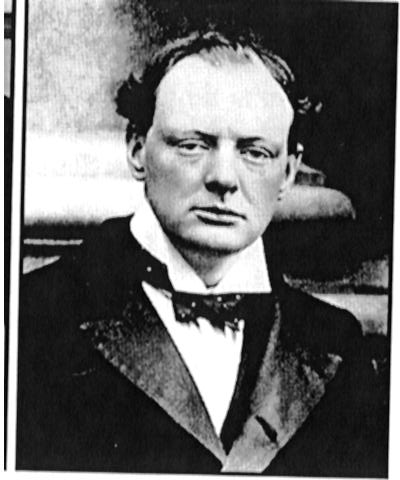
Winston Churchill: At the time of the trial, Winston Churchill was the Home Secretary, and he was the one to sign the order for Crippen’s execution. His seems to be perfectly innocent, but, he was given a letter, said to be from Cora herself. He then supposedly forgot about the letter, and Crippen hung. Nearly one hundred years later, the letter has been found, and this has sown doubt about whether or not Crippen was guilty or not. As Churchill was being pressured by the people, as almost all of them wanted Crippen to hang, it has been speculated that Churchill may have suppressed the letter to make sure that the people were happy and confident that another “murderer” had been justly punished.
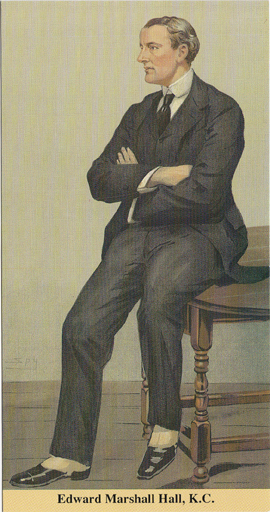
Sir Edward Marshall Hall: Known as the Great Defender, Sir Edward Marshall Hall was the best barrister of the time, and perhaps would have been able to save Crippen. His plan was to have him confess to everything except for the intent to murder. Since Hyoscine was also, as well as a poison, a sedative, a cure for alcoholism and an anaphrodisiac (which has the opposite effect of an aphrodisiac), he could have used it to get her to stop yelling at him, to stop her drinking and to end her constant affairs respectively, and since not much was known about hyoscine, it would have been easy to overestimate the dose and to accidentally kill someone, and then Crippen would have panicked and disposed of the body.